CCTV Monitoring Best Practices For Large Facilities
Coverage, health, escalation, retention, training, audit.
Read article →Most CCTV estates underperform — and the warning signs are obvious once you know where to look. Seven diagnostics security leaders can run this week, plus how to fix each one.
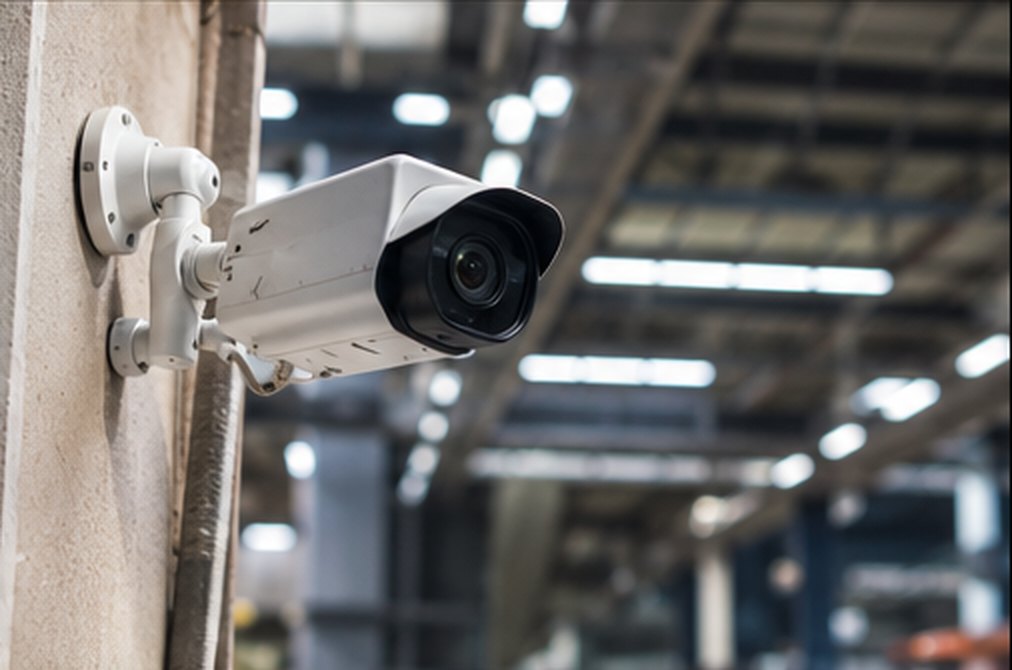
CCTV gets purchased to prevent incidents and protect people, assets and uptime. Reality often diverges from that brief. The cameras are installed, the storage is humming, the bills are paid — but the operation that depends on CCTV is still surprised by incidents, still scrubbing footage for hours after the fact, and still unsure whether the investment is doing anything useful.
If you suspect your CCTV estate is in that state, you can stop suspecting and start measuring. Here are seven diagnostics you can run this week. If you fail more than two of them, the system isn't delivering — and the fix is almost never "more cameras".
Pick a random Friday afternoon. Open your VMS and tab through every camera feed in the estate. Count the ones that are offline, frozen, badly tilted, occluded by dust or spider webs, or simply pointing at a wall instead of the area they're supposed to cover.
If that count is more than 3% of your estate, you have a camera-health problem. If it's more than 10%, you have a serious one. Across the African enterprise sites we've assessed, the typical number is between 8% and 15%. Some neglected estates cross 25%.
The damage isn't theoretical. Every dark camera is a guaranteed blind spot. When the incident happens in that zone, the footage either doesn't exist or doesn't show anything useful. The investigation becomes a guessing exercise. And almost always, the operator who needs the footage is the first person to discover the camera has been dark for three weeks.
The fix: continuous camera-health monitoring. The right software layer watches not just the video feeds but the cameras themselves — flagging signal loss, frame rate drop, sudden tilt, contrast failure, and obstruction the moment they happen. Fixes shift from "discovered during incident review" to "ticketed and resolved within a day". See our piece on camera health monitoring for more.
Walk into the control room. Count the screens. Count the operators on shift. Divide.
If each operator is being expected to watch more than 6 simultaneous feeds, you have a structural problem. The research on this is unambiguous: after 20 minutes of multi-screen monitoring, an operator misses around 90% of events on screens they're not actively focused on. That research has been replicated multiple times across UK and US studies; the human visual attention system simply doesn't scale to "watch 30 screens at once".
The unspoken consequence is that CCTV stops being a live-monitoring tool and becomes a forensic-only tool. The operators aren't preventing incidents; they're just being available to find them on the recordings afterwards.
The fix: shift operator load from "watch every screen" to "respond to triaged events". An AI video intelligence layer watches every feed continuously and surfaces only the events that warrant attention. Operators go from passively monitoring to actively responding — which is what they were hired to do.
This one is easy to test. Pick a recent incident — a theft, a slip-and-fall, a tenant dispute. Time how long it takes for whoever owns the CCTV to produce the relevant clip.
If the answer is more than 30 minutes, you have an indexing problem. If it's more than an hour, you have a serious problem. We've seen Lagos and Nairobi sites take three or four hours per incident, with two staff scrubbing footage in shifts.
The cost compounds. A security team handling 100+ incidents a year is sinking hundreds of staff-hours into manual footage review — time that should be spent preventing the next incident, not investigating the last one.
The fix: indexed event storage. A video intelligence platform timestamps and tags every detection (person, vehicle, behaviour, plate, face) as it happens. Pulling an incident clip becomes a search query, not a manual scrub. Sub-60-second incident retrieval is the new normal — and it's a software upgrade, not a hardware one.
Use our CCTV effectiveness checklist to benchmark your current state before you change anything.
Look at your alert console. If your motion-detection alerts, your VMS alarms, or your basic analytics events are being acknowledged within seconds, that's a healthy sign. If they're being marked-as-handled in batches at the end of a shift, or if the operators just ignore them, you have alarm fatigue.
Alarm fatigue is what happens when the false-positive rate of an alert source crosses an operator's tolerance threshold. Every "person at the gate" alert that turns out to be a security guard, every "motion in zone" alert that turns out to be rain — each one trains the operator to ignore the next alert. Eventually they ignore the real one too.
Once an alert source is structurally ignored, you might as well not have it.
The fix: intelligent escalation. Modern AI alerting platforms use confidence thresholds, time-of-day logic, exclusion zones, and event correlation to filter out false positives before they reach the operator. The alert volume drops by 80–95% in most deployments — and the alerts that do arrive get acted on, because each one is meaningful.
This one is for any operator running more than one site. Try to answer this question right now, without making a phone call: What's happening at every one of my sites at this moment?
If the answer requires calling each site individually, you have a cross-site visibility problem. If you have to log into separate VMS instances for each site, the problem is bigger.
This shows up most painfully in multi-site operators — mall chains, estate management companies, banking branch networks, hotel groups, healthcare networks. Each site has its own CCTV, its own staff, its own incidents. Information doesn't flow between them. A theft pattern discovered at site A doesn't reach the security teams at sites B, C, D, E.
The fix: a cross-site dashboard built on top of a video intelligence layer. Once detection is happening centrally, a multi-site operator can see every site at once, route alerts to whichever team is closest, and apply learnings from one site to the entire estate. See our piece on running a multi-site SOC.
Ask your compliance lead how long it took to prepare for the last data-protection audit. If the answer involves "weeks of work to extract retention reports, access logs, and incident response evidence", your CCTV system is not delivering compliance value.
Across Africa, the regulatory landscape has hardened: NDPR in Nigeria, POPIA in South Africa, the Kenya Data Protection Act, Ghana's DPA, Rwanda's Law No. 058/2021. Each imposes specific requirements on the processing of personal data, which includes CCTV footage in many contexts and almost always includes biometric identifiers like facial templates.
If extracting "who accessed footage of which person and for what purpose, on what date" requires a manual reconstruction from operator notebooks, you're one audit away from a problem.
The fix: built-in audit logging, role-based access controls, configurable retention windows, and on-premise/hybrid deployment options that keep footage on your network when required. These are software-layer features that retrofit onto existing camera estates.
This is the killer diagnostic. Ask anyone in your organisation — head of security, operations director, facilities manager, even a member of the executive — to name a specific incident in the last 12 months that your CCTV system actively prevented or detected in real time.
If they can't, your CCTV is operating purely as a forensic tool. It records, it stores, it gets reviewed after the fact — but it's not delivering prevention. Which means the business case for the entire investment rests on incident review and possibly deterrence. That's a defensible business case, but it's a smaller business case than the one the original CCTV proposal made.
The fix: add the live-detection layer the original proposal implied but the system never delivered. A modern AI video intelligence platform takes the existing cameras and adds the real-time intelligence — turning CCTV from a passive forensic tool into an active security tool. See AI vs traditional CCTV for the operational comparison.
The good news is that all seven of these failure modes have software fixes. None of them require buying new cameras or replacing your NVR. In every case, the answer is to add an intelligence layer on top of the existing infrastructure.
A pragmatic sequence:
This is the path most African enterprises that have made the AI transition have followed. None have started from "rip out and replace the existing system". All have started from "add intelligence to what we already have, measure it, then scale". More on what's actually happening across Africa.
Run a 90-minute audit covering camera health, incident-to-clip time, alert effectiveness, coverage maps, and operator load. Any of these failing is a value problem.
Dark cameras — a meaningful fraction of cameras offline, obstructed, or misaligned at any given time, with no monitoring to surface the issue. In assessments across African enterprise sites, 8–15% of cameras are commonly in this state, with cases reaching 25% on neglected estates.
Usually not. The cameras themselves are rarely the problem. The most common fixes are software-layer additions: AI video intelligence for live detection, camera-health monitoring for the dark-camera problem, indexed search for incident retrieval, and an alert escalation engine for operator effectiveness.
Sorveo runs on existing camera estates across Nigeria and Africa more broadly. Book a discovery call to talk through your sites or explore use cases for shopping malls.
Coverage, health, escalation, retention, training, audit.
Read article →A side-by-side of what changes when you put AI on top of CCTV.
Read article →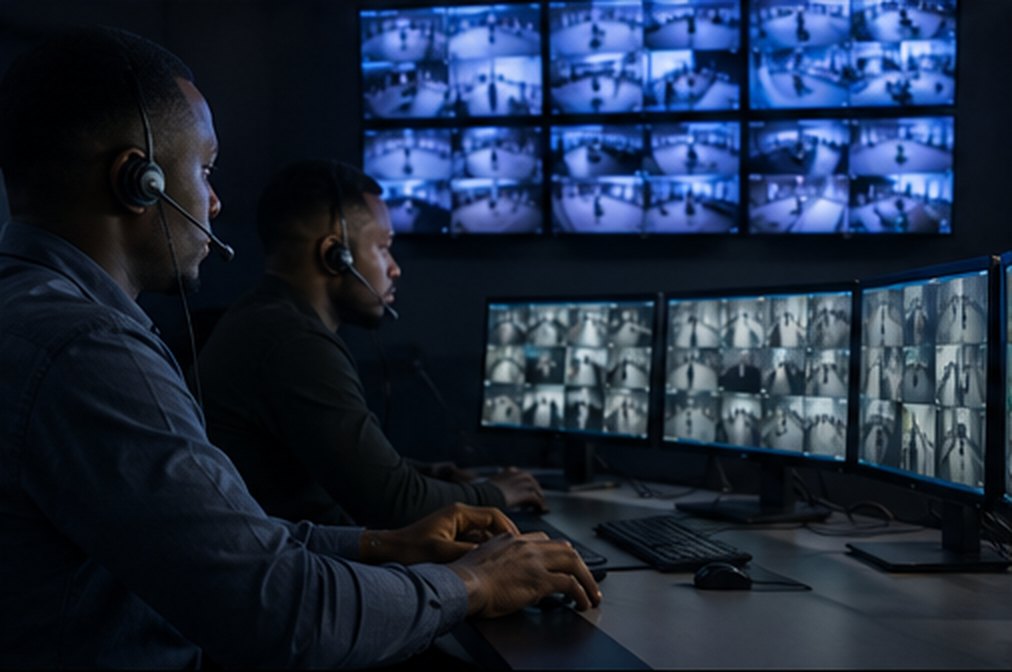
A field guide to running a multi-site SOC that scales.
Read article →Run the seven diagnostics with Sorveo on your cameras. See the gap close in real time.