Security Technology Trends In Africa For 2026
Seven trends shaping the African security technology market this year.
Read article →CCTV adoption across Africa has run far ahead of CCTV effectiveness. AI is the bridge — but only if you understand the local constraints that make African deployments genuinely different.
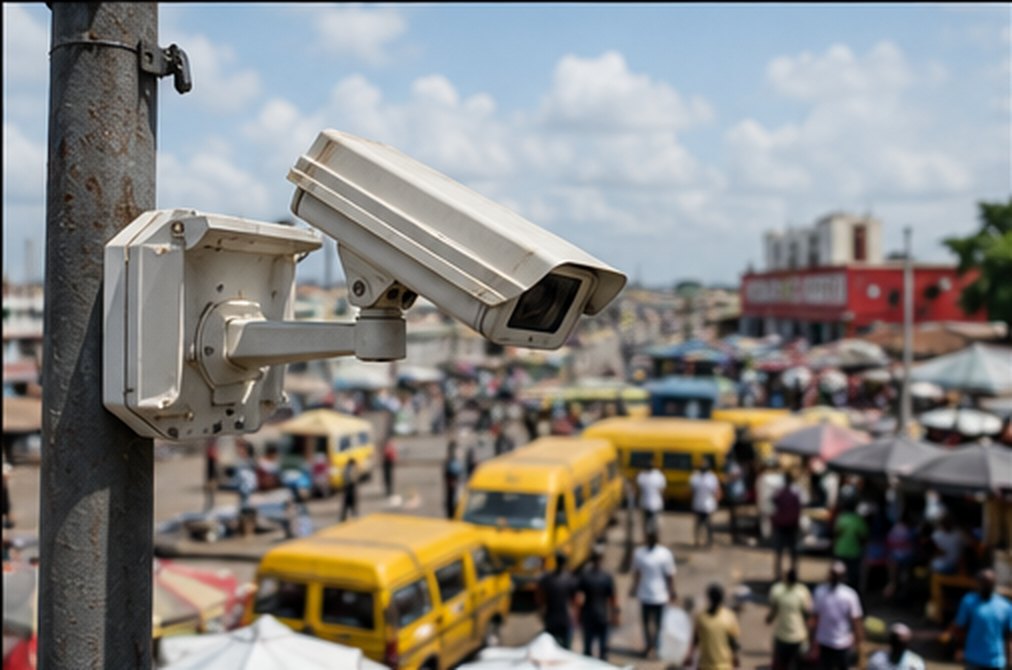
Walk into the control room of a typical Lagos shopping mall, Nairobi corporate HQ, or Johannesburg residential estate and you'll see the same picture: a wall of monitors showing dozens — sometimes hundreds — of camera feeds, and two or three operators trying to watch all of them at once. The cameras are there. The recording is happening. The footage is being stored. And almost nothing is being watched.
This is the gap that AI is closing across Africa right now. Not by replacing the cameras (those investments are already sunk), and not by replacing the operators (they have other jobs to do), but by adding an intelligent layer on top of the existing infrastructure — one that watches every feed, every second, and only escalates when something actually warrants attention.
The shift is real and accelerating. But Africa is not just "behind the West with the same playbook." The constraints, opportunities, and operational realities here are distinct. This article unpacks what's actually changing, where it's working, and what security leaders need to understand if they're evaluating AI video intelligence in 2026.
The first thing to understand is the scale of underutilisation in African CCTV estates. Across the deployments we've assessed — malls, banks, estates, hotels, corporate HQs, healthcare and government — a few patterns recur with striking consistency.
First, most cameras are recording-only. They capture footage to an NVR or VMS, the storage rolls over every 30 or 90 days, and the footage is touched only when an incident is reported. That means the camera does nothing to prevent the incident; it only helps to investigate it afterwards. For a security operation whose remit is "prevent and respond", that's a structural failure.
Second, a significant fraction of the camera estate is partially or wholly inoperative at any given time. Cameras go offline. Lenses get dirty. Mounts shift. The IR cuts out at night. The angle gets bumped during cleaning. Nobody notices until they're reviewing footage of an incident and discover the relevant camera was dark for the previous three weeks. In assessments we've performed across Nigerian and Kenyan estates, it's common to find 8–15% of cameras in this state. In the worst cases we've seen it cross 25%.
Third, human monitoring of more than four to six simultaneous feeds is functionally ineffective. This isn't a slight on operators; it's well-established cognitive ergonomics. The University of California's research on CCTV monitoring effectiveness, replicated by several UK studies, consistently finds that after 20 minutes of multi-screen monitoring, an operator misses around 90% of events on screens they're not actively focused on. Most African control rooms are running monitoring loads that vastly exceed this.
The result is an organisation paying for cameras, storage, bandwidth, and operator headcount — and still mostly using CCTV as a forensic tool, not a security tool. That's the gap AI is closing.
"AI video intelligence" is a term that's been stretched to cover everything from basic motion detection to large multimodal models. To talk about what's genuinely changing on the ground, it helps to be specific about the four operational shifts that are actually happening.
Shift 1 — From recording to real-time detection. Modern AI CCTV platforms run object detection (people, vehicles), behaviour classification (loitering, perimeter crossing, sudden movement), and watchlist matching across every feed continuously. The platform doesn't get tired and doesn't only watch the four monitors a human happens to be looking at. When something matches a configured rule, it surfaces — to app, SMS, control-room dashboard, or whatever workflow your team already uses.
Shift 2 — From hours-of-footage to seconds-to-incident. When an incident is reported (a slip-and-fall, a shoplift, a tenant dispute), legacy CCTV requires scrubbing through recorded footage to find the moment in question. AI platforms index every detection as it happens, so retrieving the relevant clip is a search query, not a manual scrub. We've seen this single change collapse incident review from 2–3 hours per case to under 60 seconds, repeatedly.
Shift 3 — From manual camera-health checks to continuous health monitoring. The same intelligence layer that watches the feeds can also watch the cameras themselves. Signal loss, obstruction, sudden tilt, contrast failure, frame rate drop — each becomes a ticket the moment it happens, not a discovery during the next quarterly review.
Shift 4 — From single-site silos to cross-site intelligence. Once detection is happening centrally, a multi-site operator can run a single dashboard that shows every site's status at once, route alerts to whichever team is closest, and apply learnings from one site (a new theft pattern at the Lagos mall) to the whole estate (every other mall in the group). That's a step-change for operators running more than two or three sites.
A discovery call about your sites and incident profile. We'll tell you whether Sorveo is a fit, and exactly how it would help.
Most AI CCTV platforms were designed for Western or Asian deployment conditions: stable power, fibre uplink, clean single-vendor camera estates, well-funded compliance teams, and procurement processes optimised for software purchases. African deployments rarely tick all those boxes. The platforms that work here are the ones that take the local constraints seriously.
Power instability. Even in tier-one African commercial centres, power is intermittent enough that any platform reliant on continuous cloud connectivity will lose detection windows. The leading platforms run edge inference — the AI processing happens on local hardware at the site itself, so detection continues through brownouts. Alerts queue locally and sync upstream when connectivity returns.
Bandwidth realities. Streaming full-resolution video from every camera to a cloud datacentre is a non-starter for most African sites. The right architecture is hybrid: most processing happens at the edge, only event metadata and incident clips travel upstream. A platform that requires you to upload all your footage to its cloud will fail commercially in most African deployments.
Mixed-vendor estates. A typical African enterprise has accumulated cameras over a decade or more — Hikvision in one wing, Dahua in another, generic ONVIF in the latest building, an older NVR in the basement. AI platforms that assume a homogeneous estate are unworkable. The right platforms speak ONVIF, RTSP, and the proprietary APIs of the major vendors, and treat estate heterogeneity as the norm.
Compliance landscape. Africa's data protection framework has matured fast in the last five years. Nigeria's NDPR (2019, updated by the NDPA 2023), South Africa's POPIA (in force from 2021), Kenya's Data Protection Act (2019), Ghana's Data Protection Act (2012, increasingly enforced), and Rwanda's Law No. 058/2021 each impose specific requirements on the processing of personal data — which, depending on jurisdiction and use case, can include CCTV footage and biometric identifiers like facial templates. Facial recognition specifically carries elevated regulatory attention almost everywhere. Practically, this means on-premise and hybrid deployment options aren't a nice-to-have; they're table stakes for serious enterprise sales.
Commercial models. SaaS pricing in USD does not always survive African procurement processes. Local-currency invoicing (NGN in Nigeria, KES in Kenya, ZAR in South Africa), payment-term flexibility, and contracting via local entities materially affect deal velocity.
Across the African deployments we work with directly and indirectly, four use-case clusters dominate.
Shopping malls and retail developments. Lagos, Accra, Nairobi, Cape Town and Cairo all have mature mall sectors where shrinkage, slip-and-fall liability, crowd management, and after-hours intrusion are persistent operational headaches. AI delivers measurable wins here because the camera estates are large enough to make manual monitoring impossible and the operational use cases are well-defined.
Residential estates. The South African gated-estate model is well established; Nigeria and Kenya are following fast. Estates with 100+ units typically have 30–80 cameras spread across perimeter, gate, common areas, and access roads. The use case is perimeter intrusion, visitor management, and after-hours activity — exactly the kind of structured detection that AI does well.
Banking and financial services. Branch networks, ATM lobbies, and headquarters facilities have a particularly high incident cost per event, which raises the value of mean-time-to-detect compression. POI (person of interest) matching for known threat actors, suspicious dwell at ATMs, and tailgating into staff areas are the three most common deployments here.
Corporate and government facilities. Both share a common operational pattern: defined-population sites (employees, contractors, visitors) where most movement should match an expected access pattern, and any unexpected pattern is an alert. AI catches these patterns where human monitoring cannot.
If AI CCTV is so compelling, why isn't it everywhere yet? Three barriers come up repeatedly.
Procurement inertia. Many African enterprises still procure security technology as a capex project (cameras, NVRs, cabling) rather than as a software subscription. AI video intelligence sells better when packaged with a clear capex-to-opex narrative and a procurement model that fits existing finance processes. Modern platforms address this by offering everything from pay-as-you-grow camera-count pricing to bundled multi-year contracts that mirror traditional capex.
Trust and proof. Buyers want to see AI working on their footage before signing. The platforms winning the African market are the ones that start with a representative set of cameras and measure outcomes over the first few weeks to demonstrate detection accuracy and operational fit. Vendors who insist on signing first and proving later are increasingly losing to this model.
Integration anxiety. Security leaders have been burnt before by integrations that promised to work with "anything" and then required three months of professional services. The honest answer here is that integration with mainstream ONVIF cameras and major NVR brands (Hikvision, Dahua, Axis) is genuinely commodity now. Integration with very old or obscure proprietary systems still requires bespoke work. A good vendor will tell you upfront which bucket your estate falls into.
If you're scoping AI CCTV in Africa right now, here's the short evaluation checklist that consistently surfaces the right vendor.
Three trends will define the African AI CCTV market through 2026 and 2027.
Regulatory pressure will increase, not decrease. NDPR enforcement in Nigeria has accelerated; POPIA enforcement in South Africa has become a regular feature of the legal calendar; Kenya's ODPC has shown growing willingness to issue fines. AI platforms that didn't build for compliance from day one will face material commercial friction.
Edge inference will become the default architecture. The combination of power and bandwidth realities, plus increasing compliance pressure to keep footage on-network, makes pure-cloud architectures untenable for most African enterprise deployments. The platforms designed for hybrid and on-prem will absorb most of the market.
The "AI" tag will become less interesting than the operational outcome. Twelve months ago, "AI CCTV" was itself a selling point. By the end of 2026, the conversation will be entirely about operational outcomes — incidents reduced, time-to-detect, false-alarm rate, camera-health uptime. The AI is just plumbing; the business outcome is what gets bought.
For security leaders, the practical implication is straightforward. The technology has matured. The local deployment patterns are well understood. The compliance frameworks are in place. The remaining question is no longer whether to upgrade to AI-powered monitoring, but how fast — and with which partner.
Yes. AI-powered CCTV platforms are now operational across Nigerian malls and banks, South African estates and mixed-use developments, Kenyan corporate sites, Ghanaian retail, Rwandan public infrastructure and Egyptian logistics hubs. Adoption is fastest where existing camera estates already exist and where security operations have a clear mean-time-to-detect problem to solve.
It's rarely the AI itself. The most common blockers are camera-estate hygiene, unstable uplink between sites and the SOC, and procurement processes that aren't optimised for software-only purchases. Modern AI CCTV platforms address all three.
Yes — NDPR in Nigeria, POPIA in South Africa, the Kenya Data Protection Act, Ghana's Data Protection Act and Rwanda's Law No. 058/2021 all impose specific requirements on the processing of personal data, which can include CCTV footage and biometric identifiers. Modern platforms offer on-premise and hybrid deployment so customers retain control over footage residency, retention, and access governance.
The leading platforms — Sorveo included — are built specifically to work on existing IP, NVR, and hybrid setups, including mixed-vendor estates that combine Hikvision, Dahua, Axis, and generic ONVIF cameras. Camera replacement is rarely required; configuration changes sometimes are.
Reported outcomes typically cluster around three metrics: meaningful reduction in mean time to detect incidents, substantial reduction in false alarm fatigue, and reduced shrinkage or perimeter incidents in the 20–40% range over a 90-day window. Specific numbers vary by site discipline and incident baseline.
Sorveo is an AI video intelligence platform built specifically for African deployment realities — edge-capable, mixed-vendor, NDPR-aware, and headquartered in Lagos. Book a discovery call to talk through your sites, or read more about Sorveo in Nigeria and Sorveo for shopping malls.
Seven trends shaping the African security technology market this year.
Read article →
A side-by-side of what changes when you put AI on top of CCTV.
Read article →
Where facial recognition genuinely earns its keep, where it fails, and how to evaluate vendors honestly.
Read article →Tell us about your sites and the challenges you're facing. We'll tell you whether Sorveo is a fit, and exactly how it would help.