How AI Is Transforming CCTV Monitoring in Africa
The wider picture across the African market.
Read article →A side-by-side of what actually changes when you add AI to CCTV. Coverage, cost, operator effectiveness, incident outcomes — with numbers from real deployments.
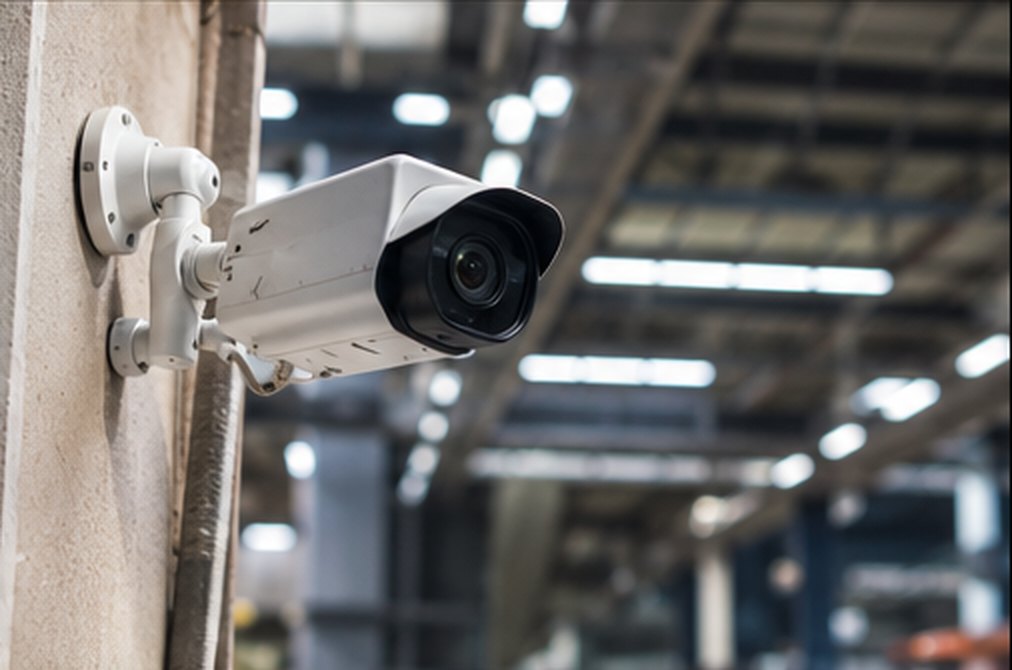
"AI CCTV" and "traditional CCTV" get compared a lot. Most of the comparisons are vendor marketing. This one isn't — it's an honest side-by-side across six dimensions that actually matter for security operations: coverage, detection speed, operator effectiveness, forensic review, cost, and the scenarios where each model still wins.
Traditional CCTV monitoring is the camera-plus-NVR-plus-VMS-plus-human-operator model that has dominated the industry since digital CCTV took over in the early 2000s. Cameras record continuously; an NVR or VMS stores and indexes the footage; operators watch a wall of monitors; basic motion detection generates alerts; incident review involves manual scrubbing of footage.
AI CCTV monitoring adds a software layer on top of that same infrastructure. The cameras don't change. The NVR or VMS doesn't change. What changes is that every feed is now watched continuously by computer-vision models running at the edge or in the cloud, generating structured events (person detected, vehicle entered zone, watchlist match, behaviour anomaly) that route to operators as a triaged event queue rather than as 60 simultaneous video feeds.
The conversation usually framed as "AI vs traditional" is more accurately "CCTV without an intelligence layer vs CCTV with one". Same cameras either way. Different software underneath.
The unit "camera count" is misleading because two estates with identical camera counts can have wildly different effective coverage.
In traditional monitoring, effective coverage = (cameras × portion-of-time-actually-watched). A 400-camera estate watched by two operators on 16 monitors has an effective coverage closer to 5–10% than to 100%. The other 90% of camera-hours are recorded but unmonitored.
In AI monitoring, effective coverage approaches 100% — every camera, every second, watched by the same models that surface events to a triaged queue. The shift from 5–10% to ~100% is the single biggest operational gap AI closes.
The practical consequence: incidents that would have been missed in traditional monitoring (because they happened on a feed nobody was watching) get caught in AI monitoring. The pattern is most striking after hours, in less-trafficked zones, and on the cameras nobody had on screen because they "usually didn't have anything happening".
| Metric | Traditional | AI |
|---|---|---|
| Best-case detection latency | Seconds | 2–10 seconds |
| Median detection latency | Minutes to hours | 5–15 seconds |
| Worst-case detection | Never (discovered weeks later) | ~30 seconds (with retry) |
| Detection consistency | Variable, operator-dependent | Highly consistent |
The best case for traditional monitoring — an operator happening to look at the right screen at the right moment — matches AI detection. The median and worst case do not. Traditional monitoring's effectiveness collapses on the cameras nobody is currently watching, which is most of them.
For high-cost incidents — perimeter breaches, theft in progress, slip-and-fall events — the difference between 5 seconds and 15 minutes of detection latency is enormous. It's often the difference between "intercepted before damage" and "responded to after damage".
The biggest myth about AI CCTV is that it replaces operators. It doesn't — it changes what they do.
In traditional monitoring, operators spend most of a shift staring at a wall of monitors, hoping to catch events on the screens they happen to be focusing on. The cognitive load is high; the productive output is low. After 20 minutes, attention has degraded measurably. After two hours, miss rates approach 90% on screens not actively focused on.
In AI-augmented monitoring, operators handle a triaged event queue: 15–25 events per shift (in a well-tuned deployment) where each event represents something the AI is meaningfully confident about. The operator's job becomes verification, escalation and response — actual security work — instead of passive screen-watching.
The productivity multiplier we see in deployments is roughly 3-5x: two operators handling the workload of what was previously a 6-10 person screen-watching team, with better outcome metrics across the board.
Book a discovery call to talk through your current response times, and we'll show you where Sorveo would cut them.
When an incident is reported and someone needs to find the footage, the two models diverge dramatically.
Traditional model: log into the VMS, navigate to the approximate time, navigate to the approximate camera, scrub frame-by-frame to find the relevant moment. Often the wrong camera was chosen and the search restarts. For complex incidents with multiple cameras, this takes 30 minutes to 4+ hours per case.
AI model: search by event type, time window, location, and attributes ("red vehicle, north entrance, between 18:00 and 22:00 last Thursday"). The relevant clip is retrieved in seconds. For complex incidents, the platform can stitch together the subject's path across multiple cameras automatically.
Compounded across a facility handling 100+ incidents a year, this single change reclaims hundreds of staff-hours annually.
Per-camera, AI CCTV costs more than traditional recording-only operation. The licence fee for the intelligence layer is real and ongoing. But total-cost-of-operation is a different calculation, and for moderate-to-large estates it consistently lands in AI's favour.
The cost factors:
| Cost line | Traditional | AI |
|---|---|---|
| Cameras | Same | Same |
| NVR / storage | Same | Same (or hybrid cloud) |
| Software licence | Low (VMS) | Higher (intelligence platform) |
| Operator headcount | High (1 per ~8–12 cameras, ideal) | Lower (1 per 100+ cameras with triaged queue) |
| Incident investigation hours | High (manual scrub) | Low (indexed search) |
| Loss from missed incidents | High | Materially lower |
| Camera-health labour | High (manual inspection cycles) | Low (auto-ticketed) |
For a 200-camera mid-size facility, the typical breakeven is 6–12 months after deployment, with ongoing operational savings continuing thereafter.
In the interest of intellectual honesty: there are scenarios where traditional CCTV remains the right answer.
For everything else — moderate-to-large estates, sites with real incident prevention requirements, multi-site operators, anywhere with a real security operations function — AI CCTV consistently delivers better outcomes for similar or lower total cost.
For an operator currently running traditional CCTV who wants to migrate to AI, the practical sequence is:
None of this requires ripping out the existing CCTV. The cameras stay. The NVR or VMS often stays. What changes is the intelligence layer on top, and the operating model that flows from it. See the wider picture across the African market.
Per-camera, yes. Total-cost-of-operation, usually lower for moderate-to-large estates because AI replaces or augments operator headcount, reduces investigation hours, and prevents costlier incidents.
No. Modern AI platforms work on top of existing IP, NVR, and hybrid CCTV systems, including mixed-vendor estates.
Typical AI latency is 2–10 seconds. Traditional human monitoring varies from seconds (lucky) to hours (or never). AI-augmented operations consistently show order-of-magnitude MTTD improvements.
See the comparison on your own operation. Book a discovery call, request a quote or read about deployments in shopping malls.
Same cameras, before and after. See the numbers move.