How AI Is Transforming CCTV Monitoring in Africa
The constraints that make African deployments different.
Read article →Facial recognition has gone from controversial novelty to mainstream security capability. Here's an honest accounting of where it earns its keep, where it fails, and how to deploy it lawfully — including under Africa's data protection regimes.
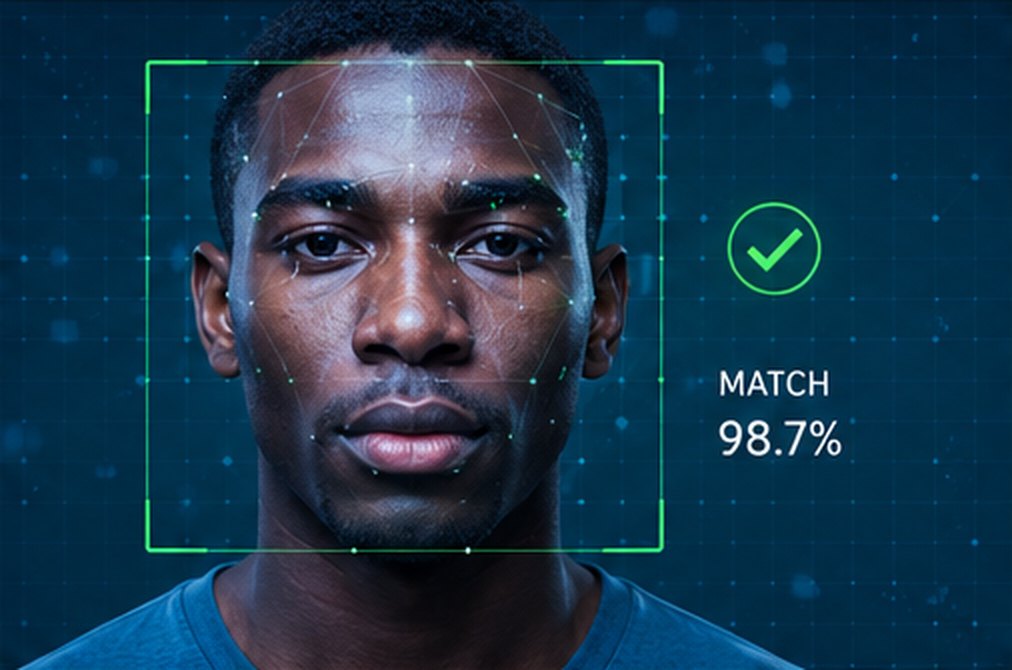
Facial recognition is the single most polarising capability in modern video intelligence. For some buyers it's the headline feature that justifies the platform. For others it's the headline risk that bars the platform from procurement. Both reactions are usually based on incomplete understanding of what the technology actually does, how it performs, and how it can be deployed responsibly.
This article gives an honest, technical accounting. No marketing — just what works, what doesn't, and what regulators actually require. The framing is African deployment but most of the technical reality is universal.
The term "facial recognition" gets stretched to cover several distinct technical operations. Pinning them down precisely is the first step to a useful conversation.
Face detection. Determining that a face is present in an image. This is uncontroversial and ubiquitous — every smartphone camera does it. By itself, face detection identifies nobody.
Face attribute analysis. Estimating attributes from a face — approximate age, apparent gender, emotion, head pose. Sometimes useful for analytics (anonymous demographic summaries), almost never used in security applications.
Face matching (1:1). Comparing a detected face against a single specific reference image and returning a similarity score. Used at access points where someone presents identity (a staff badge, a visitor pass) and the system verifies the face matches the claimed identity.
Face identification (1:N). Comparing a detected face against a reference set of N known faces and returning the closest matches. The serious enterprise security use case is bounded 1:N — matching against a watchlist the customer owns (banned individuals, persons of interest, registered visitors). The controversial use case is unbounded 1:N — matching against population-scale databases the customer doesn't control.
For security operations, the technology that matters is overwhelmingly bounded 1:N face matching against a customer-controlled watchlist. Everything serious enterprise vendors sell is some form of this. Treat any vendor talking about general-population identification with deep scepticism.
Used in the right contexts, facial recognition delivers operational value that's difficult to replicate any other way.
Watchlist matching for known offenders. Malls, banks and corporate sites all maintain lists of individuals who have been previously banned, caught, or flagged. Without facial recognition, "watch out for these people" is a poster on the security office wall that nobody actually looks at. With facial recognition, the watchlist becomes a live filter against every camera in real time.
Access control for known populations. Corporate offices, hospitals, secure facilities and gated estates have defined-population sites where most movement should match an expected pattern. Facial recognition enables passive access verification — the right person walks through the right door at the right time, no card-tap required, and the system alerts only when something doesn't match.
VIP and member recognition. Hotels, hospitality and high-end retail benefit from recognising VIPs and high-tier members on arrival. The use case is service, not security, but the technology is the same.
Lost children and vulnerable persons. When a parent reports a missing child, facial recognition against an enrolled image collapses the search radius from "the whole mall" to "the cameras that have seen this child in the last 30 minutes". In healthcare settings, the same workflow applies to dementia patients who may have wandered from a ward.
Suspect investigation. When a crime is reported with a partial face captured on one camera, the platform can search across other cameras and time windows to reconstruct the subject's path. This is forensic, not preventive — but the time savings are enormous.
The honest framing for buyers: laboratory accuracy and production accuracy are different numbers. Vendors quote the first. Operators experience the second.
Top-tier facial recognition models score above 99% accuracy in NIST FRVT (Face Recognition Vendor Test) evaluations with high-quality face images and controlled conditions. Some scoring above 99.9% in 1:1 verification tasks. These are real numbers — and they're not what your cameras see.
Production accuracy depends on five variables:
What this means in practice: a deployment with carefully placed cameras, high-quality enrolment images, well-tuned thresholds, and a manageable watchlist size will perform at or near the laboratory numbers. A deployment that ignores those variables can see precision and recall drop by 10–30 percentage points. The variable buyers can most easily control is enrolment quality.
Sorveo can run a free assessment of your camera placement and produce an honest accuracy estimate before any deployment.
For years, facial recognition systems had measurable performance gaps across demographic groups — particularly between lighter-skinned and darker-skinned subjects, and between male and female faces. The 2018 Gender Shades paper made this widely known, and subsequent NIST evaluations confirmed the gaps existed in many commercial systems.
The picture in 2026 is significantly improved but not uniformly so. The leading models in the 2023+ NIST FRVT round show dramatically reduced demographic performance gaps compared to 2018-era models. But:
For African deployments, this matters more than average. Many of the most widely deployed legacy systems were trained on datasets that under-represented African demographics. Buyers should ask vendors specifically about NIST FRVT performance broken down by demographic, and about training data composition. The right vendor will provide both without flinching.
Facial recognition is governed across Africa as biometric processing, which is treated as a special category of personal data with elevated requirements. The headline regimes:
The practical implications for facial recognition deployment in Africa:
Vendors who can support all of this — on-prem deployment, configurable retention, audit logging, role-based access — make the compliance posture meaningfully easier. Vendors who can't are setting their customers up for problems.
A short, opinionated playbook for facial recognition deployment in security operations:
Three scenarios where facial recognition is the wrong tool:
1. General population surveillance. Identifying unknown members of the public against unbounded databases is operationally unnecessary, legally fragile, and ethically dubious. If the use case requires this framing, the use case is wrong, not just the tool.
2. Lighting and angle conditions that don't support reliable face capture. Outdoor entrances with strong backlighting, ceiling-mounted cameras at steep angles, low-resolution legacy cameras. Behaviour analytics, vehicle recognition, or perimeter rules often deliver better outcomes in these conditions.
3. Use cases better served by access control. If the operational need is "verify the right person is entering the right area", a card-tap or biometric badge often performs better than passive facial recognition — and avoids the compliance and accuracy issues entirely.
Yes, but its use is regulated. Nigeria's NDPR/NDPA, South Africa's POPIA, Kenya's DPA, Ghana's DPA, and Rwanda's Law No. 058/2021 each impose specific requirements on biometric data processing. Lawful deployment typically requires a documented purpose, proportionality, customer-controlled watchlist scope, retention limits, and on-premise or hybrid deployment to retain footage residency.
Facial recognition is sometimes used as an umbrella term. Face matching, more precisely, is the comparison of a detected face against a known reference set. The serious enterprise use case is bounded face matching against a customer-owned watchlist — not unbounded identification.
Top-tier models score above 99% in laboratory conditions. Production accuracy depends on camera placement, lighting, angle, image resolution, and enrolment quality. Well-deployed systems perform near laboratory numbers; poorly-deployed systems can drop 10–30 percentage points.
For known-population settings (employees, members, registered visitors) and watchlist matching against known offenders, the operational value is high. For unbounded identification of general public, the regulatory and ethical burden often outweighs the operational benefit.
Sorveo offers facial recognition as part of a broader video intelligence platform — with on-prem deployment, customer-owned watchlists, audit logging, and full alignment to NDPR and other African data protection regimes. Explore the dedicated facial recognition solution or book a discovery call.
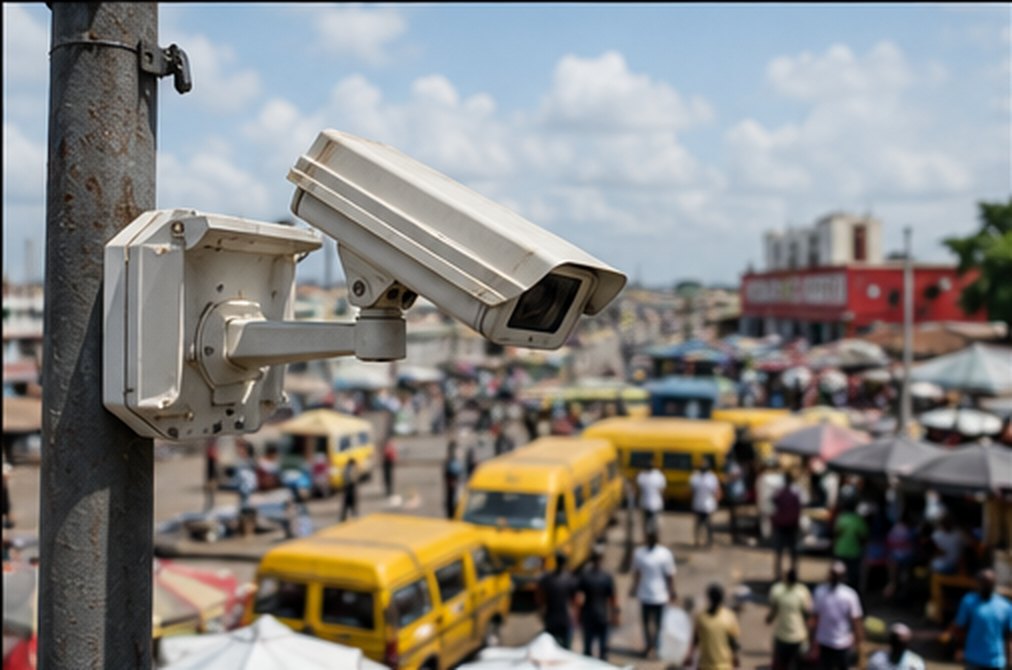
The constraints that make African deployments different.
Read article →
A plain-English definition.
Read article →
Shrinkage, slip-and-fall, lost children — AI use cases that work.
Read article →A discovery call about your watchlist needs. NDPR-aligned. On-prem capable.